On May 12, 2025, the New Albany Architectural Review Board sat down to consider a homeowner's request to build a 1,200-square-foot garage on a 1.10-acre parcel on New Albany Condit Road, a property built in 1960 and backing up to the Windsor subdivision. The board's discussion centered on the door: its size, its orientation, and whether a neighboring garage that had already been grandfathered in set a precedent. Board Member Iten said he could work with the size but not the double-door layout. Chair Hinson said he wanted to say yes but felt bound by the rules as written. The board tabled the application for 60 days.
The board's careful review is part of how New Albany keeps its consistent look, and it takes calendar time. Sixty days is a meaningful stretch for a seller hoping to close before winter.
That gap between how fast New Albany homes move on the open market and how fast the city and its private communities move on exterior changes is the thing sellers in this village rarely see coming. It matters more this year than it has in a while, because the market side of that equation has gotten faster while the approval side runs on its own schedule.
A Market That Doesn't Wait
New Albany's 2026 sales data tells slightly different stories depending on whose numbers you're reading, and the differences are worth understanding before the similarities. A May 2026 report on New Albany logged a 13-day median time on market. August 2026 figures put the average closer to three weeks, at 18 to 20 days, with homes selling for about 99% of list price. A broader dataset for February 2026 showed a 52-day median across a wider price range. The spread comes from small monthly sample sizes in a market where a single multi-million dollar estate closing can shift the average as much as a dozen entry-level sales, and from the fact that New Albany's price bands run from homes near $280,000 to sales that touched $3.2 million in a single month this year.
What the numbers agree on is the direction. Every version of the 2026 data shows homes moving quickly, not sitting. That's the backdrop against which a seller has to plan any exterior project meant to make a home show better before it lists.
Why a Driveway Isn't Just a Driveway Here
New Albany's Architectural Review Board exists under a section of city code called the Architectural Review Overlay District, which requires a Certificate of Appropriateness for what the ordinance calls a major or minor environmental change to a property. Some of those changes can be cleared at the staff level. Others, especially anything that needs a waiver from the design standards, go in front of the full board at a public meeting, the same kind of meeting that spent part of an evening in 2025 debating a garage's door count and orientation.
New Albany's own zoning code is explicit that it isn't meant to override private agreements between property owners: the ordinance states it does not intend to interfere with, abrogate, or annul any easements, covenants, or other agreements between parties unless they conflict with the ordinance itself. In practice, that means clearing the city's review process doesn't replace approval from a subdivision's own architectural review committee.
The Rules That Surprise Most Owners
The design standards aren't secret, but they're specific enough that most homeowners only learn them when a contractor calls to say a planned material won't pass review. A Columbus Suburban article summarizes several of the recurring standards:
| Exterior Feature | Common New Albany Standard |
|---|---|
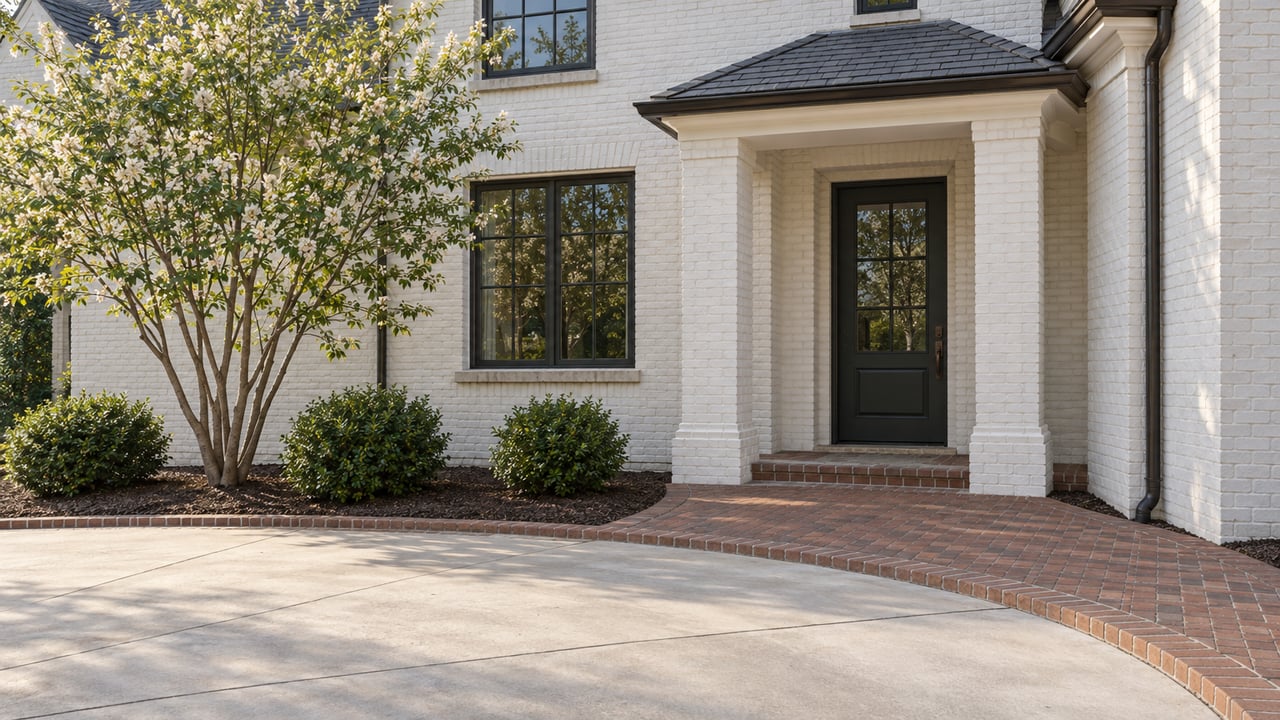
| Driveways | Black asphalt only; concrete is not permitted |
| Garage doors | Glass panels allowed only in the upper section |
| Siding and brick | Must match existing materials in color and style |
None of these are unusual on their own. Plenty of upscale communities have material standards. What's easy to miss is that "siding and brick must match existing materials in color and style" carries weight in the review process, which involves a public meeting and a vote for anything requiring a waiver.
Where the Two Timelines Collide
A seller who wants a home to show well in October has a limited number of weeks to work with. If that seller decides in September to repave a cracked driveway in concrete because it's cheaper and faster than asphalt, or add a deck in a finish that doesn't match the guidelines, the project doesn't just risk a rejected inspection. It risks landing on the agenda of a board that weighs each application against the city's design guidelines in a public meeting and, as its May 2025 record shows, may table an application while design details are revisited.
Meanwhile the market isn't going to wait. A home that's ready to list in three weeks in a market where comparable homes are moving in 13 to 20 days doesn't have room for an unresolved exterior project sitting half finished in the driveway when buyers tour. The seller ends up choosing between listing with visible work in progress or delaying the listing to chase an approval that was never guaranteed to come quickly in the first place.
A Practical Sequence Before You Call a Contractor
For anyone in New Albany planning exterior work ahead of a sale, the order of operations matters more than the project itself.
- Confirm whether the home sits within a subdivision that carries its own architectural covenants on top of city rules, since both may need separate approval.
- Check whether the planned change is a minor environmental change that city staff can clear directly, or a major change or waiver request that requires a full Architectural Review Board hearing.
- Submit early. The board's May 2025 record includes an application tabled for 60 days to allow design revisions, so a complete submission built around the design guidelines helps protect the calendar.
- Sequence the listing date around the approval timeline, not the other way around. A driveway or deck project started without sign-off can turn into the reason a home isn't ready when the market is.
- If the project isn't essential to how the home shows, weigh whether it's worth the timeline risk at all versus addressing it as a documented allowance in the listing.
None of this is a reason to avoid updating a home before selling it in New Albany. It's a reason to sequence that work with the same discipline buyers already expect from a home in this part of Central Ohio.
What This Looks Like for Buyers Too
The same rules apply after closing, not just before listing. A buyer who closes on a New Albany home planning to repave the driveway, swap the garage door, or add a deck the following spring is stepping into the same two-track approval system a seller would have faced. Understanding which of those changes need a Certificate of Appropriateness, and which subdivision-level committee might also weigh in, is worth doing before the first estimate comes in from a contractor.
A Few Direct Questions
Does every exterior change need board approval? No. The ordinance distinguishes between minor changes that city staff can clear and major changes or waiver requests that require a full board hearing. The distinction depends on the specific change and where the property sits.
What happens if work starts without approval? The city's Record of Action documents make clear that a certificate of appropriateness on its own doesn't authorize construction. A building or zoning permit is still required before work begins, and skipping the review step can leave a project without either.
Do private covenants matter even if a city process clears a project? Yes. Private covenants come from a subdivision's own recorded documents, not from city zoning maps, and New Albany's zoning ordinance is explicit that it doesn't override those private agreements. Clearing the city's Architectural Review Board is a separate step from clearing a subdivision's own architectural committee, and a project can need both.
Anyone weighing pre-listing updates in New Albany, or trying to understand what a specific property allows before making an offer, can look at the New Albany neighborhood guide or start a conversation with The Laumann Group about timing a project around a real closing date instead of a hoped-for one.
This article is general information, not legal, tax or financial advice. Consult a qualified professional about your situation.
