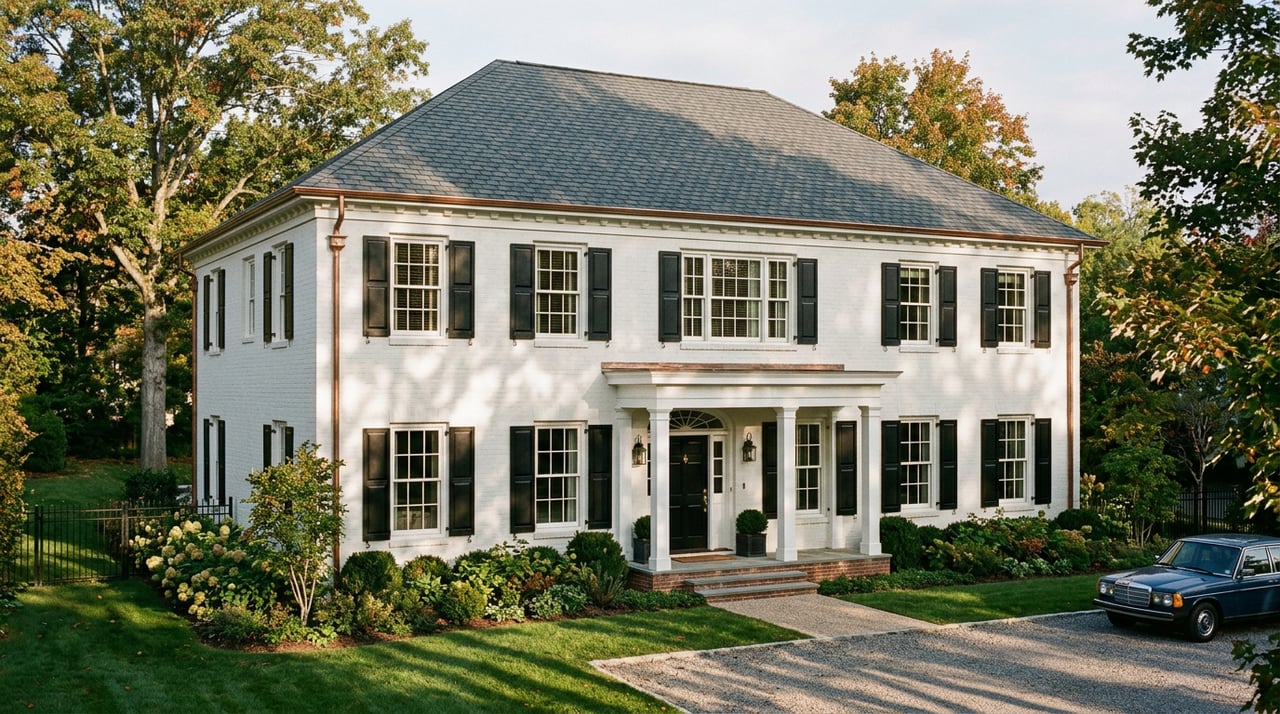
Bexley sells itself on its canopy. Ask anyone who has walked Parkview Avenue in October, and they will tell you the arching maples and oaks are half the reason people fall for this city. Those same root systems can also affect the clay pipe running from the house to the street.
Knowing the condition of a sewer line can help sellers plan ahead.
Trees and Sewer Lines in Bexley
In March 2013, Bexley became the first city in the United States to be accredited as a municipal arboretum by the Morton Register of Arboreta. The city's forestry department maintains a catalogue of more than 14,000 trees across more than 130 species within Bexley's rights-of-way and public parks, and the arboretum designation covers the entire city, not a single park or preserve. That is a genuinely rare civic identity, and it is one of the reasons buyers pay a premium to live under this canopy.
It is also why Bexley's housing stock, built mostly between the 1910s and the 1950s, tends to sit on original clay sewer laterals that have been in the ground for seventy to over a hundred years. Clay pipe develops hairline cracks at its joints over decades of freeze-thaw cycles and soil movement. Mature root systems, the kind Bexley has cultivated on purpose for over a century, find those cracks and grow directly into the line, first as an inconvenience and eventually as a full blockage. It is the same mechanism that makes older sections of Clintonville, Grandview Heights, and the Near East Side prone to sewer scope surprises, and Bexley's mature tree canopy makes sewer-line condition worth checking.
None of this is a reason to think less of a Bexley address. It is a reason to know what you are dealing with before a buyer's inspector finds it for you.
What Ohio's Disclosure Form Actually Asks, and Doesn't
Ohio law requires most sellers of one-to-four-unit residential property to complete the Residential Property Disclosure Form under Ohio Revised Code Section 5302.30 and deliver it to the buyer before they sign a purchase contract. The sewer section asks you to identify the type of system, the date of the last inspection if you know it, and whether you know of any previous or current leaks, backups, or other material problems.
That last phrase, "within the actual knowledge of the transferor," is doing more work than most sellers realize. In a case decided in 2025, the Ohio Supreme Court ruled that a working sewer line is not automatically a material defect a seller has to flag, even if it later interferes with what the buyer wanted to build. The court's reasoning was straightforward: the form exists to alert buyers to flaws that affect ordinary residential use, not to protect every future renovation plan. A line that functions normally does not trigger disclosure. A line with a documented history of backups or root intrusion does.
Here is the distinction as it plays out on the form itself:
| You are expected to disclose | You are not required to disclose |
|---|---|
| Known backups, leaks, or slow drains you have experienced | A working line that has simply never been scoped |
| Repairs made to the sewer system, even if the problem is fixed | Speculative concerns about how old the pipe might be |
| The date of your last inspection, if you had one done | Conditions no inspection or experience has ever revealed to you |
The practical upshot: if you have never had your Bexley home's sewer line scoped, you may have nothing to disclose, and nothing to hide. But you also have no way of knowing what a buyer's inspector will find in week two of your own transaction, at a point when you have far less leverage to negotiate calmly than you do today.
Why This Matters More in a 36-Day Market
Over the three months ending June 2026, Bexley's median sale price ran around $695,000, up 7.8 percent from the same period a year earlier, with homes typically going pending in about 36 days. That pace, and a market competitiveness score in the neighborhood of 80 out of 100, describes a seller's market with real urgency behind it. Buyers are moving fast, often with multiple offers in play, and sellers are largely holding firm on price rather than negotiating it down.
A market that moves that quickly rewards sellers who have already answered the questions a buyer's inspector is about to ask. Sellers who have not prepared may face added pressure. A root-intrusion finding that surfaces during a buyer's due diligence period does not just cost repair money. It costs the days you don't have in a 36-day market, and it hands negotiating leverage to the other side at the exact moment you had the most momentum.
A sewer scope done before you list, typically a camera inspection run by a licensed plumber through the cleanout or an accessible fixture, costs a few hundred dollars and takes under an hour. What it buys you is the ability to walk into your listing knowing exactly what condition your line is in, price accordingly if there is an issue, and answer the disclosure form's sewer section from documented fact rather than guesswork.
The Permit Clock Runs on Its Own Schedule
If your pre-listing plans include anything more than paint and staging, Bexley's Architectural Review Board timeline is worth building into your calendar early. According to Bexley's Building and Zoning Department, major exterior changes require Architectural Review Board approval, and applications for that review are due six weeks before the Board of Zoning and Planning meeting a homeowner is targeting. The board recesses in December, which matters if you are hoping to close out a project before a winter listing.
None of this should discourage a seller from making improvements that genuinely help a listing. It is simply a reminder that "quick fix before we list" and "requires ARB approval" are sometimes the same project, and the six-week runway is easier to plan around than to discover midstream.
A Practical Pre-Listing Sequence
For sellers thinking through the order of operations, a workable sequence looks like this:
- Schedule a sewer scope early, well before you set a list date, so you have time to address anything it finds without rushing.
- If you are planning exterior work that changes the look of the home, principal structure changes, additions, or anything touching the front elevation, check with Bexley's Building and Zoning Department early enough to account for the six-week ARB application window.
- Complete the Ohio disclosure form based on what you actually know and have documented, not what you assume a buyer's inspector might eventually find.
- Price and market the home with full knowledge of its systems, which tends to produce cleaner negotiations than pricing around an unknown.
A Neighborhood Worth the Extra Step
Bexley's tree canopy is part of what gives the city its distinctive character. It is the reason people choose this city over other close-in Columbus suburbs, and it will keep being that reason long after your sale closes. The point of understanding the plumbing side of that canopy is not to see the trees differently. It is to walk into a fast-moving market with the same clarity a hundred-year-old oak has about where its roots are headed.
If you are weighing a sale in Bexley and want a second opinion on timing, pre-listing prep, or what a sewer scope might mean for your specific street, the team at The Laumann Group works this market regularly and is glad to talk through it with you. You can also browse our Bexley neighborhood guide or read more on what makes Bexley's character homes distinct as you plan your next move.
A few common questions from Bexley sellers:
Does every home in Bexley have a clay sewer lateral? Not necessarily. Some lines have been replaced or relined over the years, particularly after a prior root intrusion issue. A scope is the only reliable way to know what your specific line is made of and what condition it is in.
Is a sewer scope legally required before I sell? Ohio's disclosure law only requires you to disclose problems within your actual knowledge. A scope simply gives you knowledge you would not otherwise have.
Does Bexley's arboretum status limit what I can do with my own trees before listing? The arboretum designation primarily governs trees within the city's rights-of-way and public parks, maintained by the forestry department. Any work on a private tree that could affect drainage, grading, or an adjacent sewer lateral is worth discussing with a licensed plumber or arborist as part of your pre-listing plan.
This article is general information, not legal, tax or financial advice. Consult a qualified professional about your situation.
